The Free Resource Literally Falling from the Sky (And How to Catch It)
UK homes could save 5,000 litres of tap water yearly with a simple water butt. Here's why your garden wants rainwater more than the processed stuff anyway.
GARDENWORLD


You know what's ridiculous? We live in a country where it rains roughly 150 days a year, yet we water our gardens with expensively treated drinking water. Water that's been filtered, chemically treated, and pumped through miles of pipes... to pour on your tomatoes.
Meanwhile, free, plant-perfect water is literally bouncing off your roof into the drain.
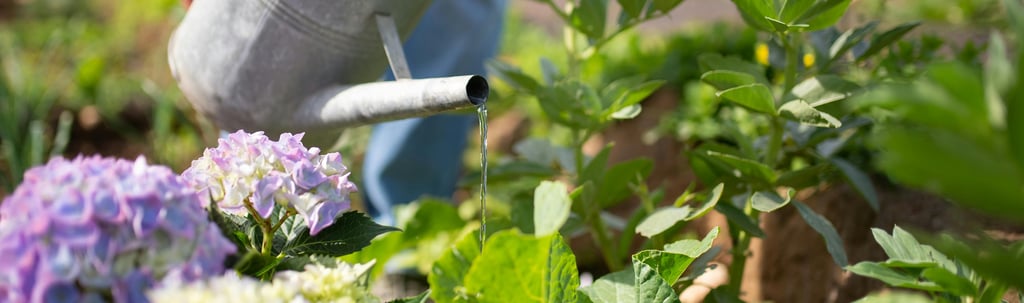
Why Your Plants Prefer Rainwater
Here's what nobody mentions: rainwater is actually better for your garden than tap water. It's:
Naturally soft (no limescale)
Chemical-free (no chlorine or fluoride)
The right pH for most plants
At ambient temperature (no shocking roots with cold water)
Your plants evolved with rainwater. Tap water is just making do.
The Numbers That Matter
Average UK roof collects: 85,000 litres of rain yearly
Average garden water usage: 5,000-10,000 litres yearly
Potential tap water saved: Up to 10,000 litres
That's 10,000 litres of drinking water not wasted on your lawn. In drought-prone areas, that genuinely matters.
Setting Up Your Water Butt (Without the Faff)
Forget complicated diagrams. Here's what actually works:
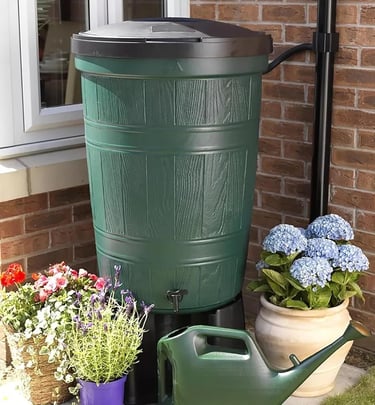
Location: Next to a downpipe (obviously). But also:
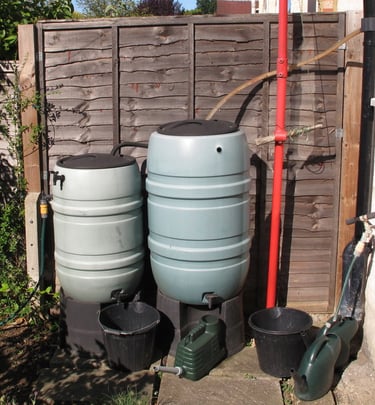
On solid ground (200L of water weighs 200kg)
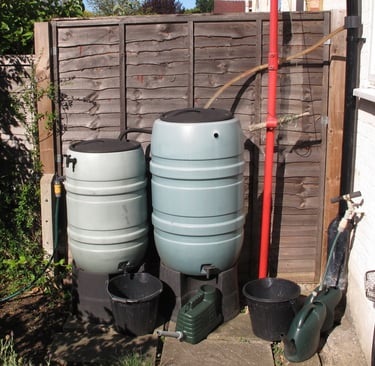
Raised on blocks for easy watering can access
Where you'll actually use it (no point having it miles from the garden)
Size:
100L: Token effort, empties too fast
200-250L: Sweet spot for most gardens
400L+: Only if you're serious about water independence
Installation (genuinely takes 20 minutes):
Put butt on stand/blocks
Drill hole for tap if not pre-fitted
Connect diverter kit to downpipe
Done. Seriously, that's it.
The Kit You Actually Need
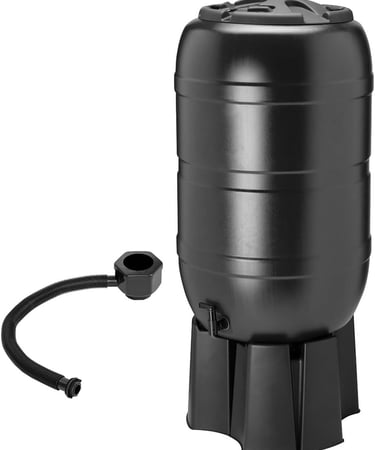
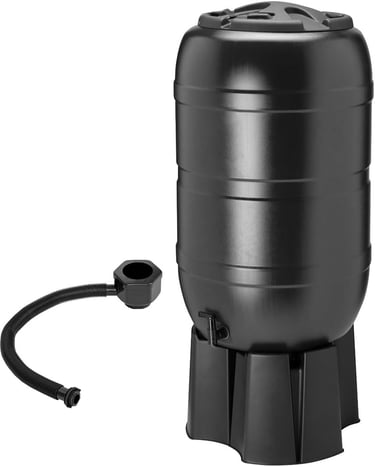
Basic water butt (£40-60)
Does the job
Usually includes tap
Lid keeps mosquitoes and other insects out
Zero style points
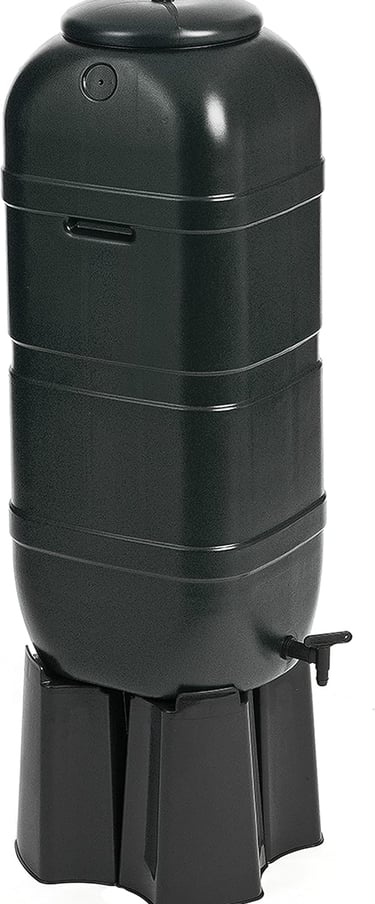
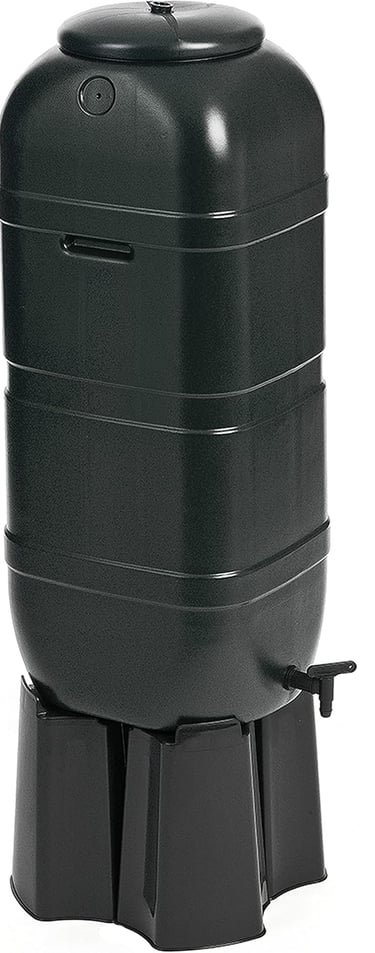
Slimline version (£50-80)
For tight spaces
Same capacity, smaller footprint
Costs more due to specialised design/manufacturing
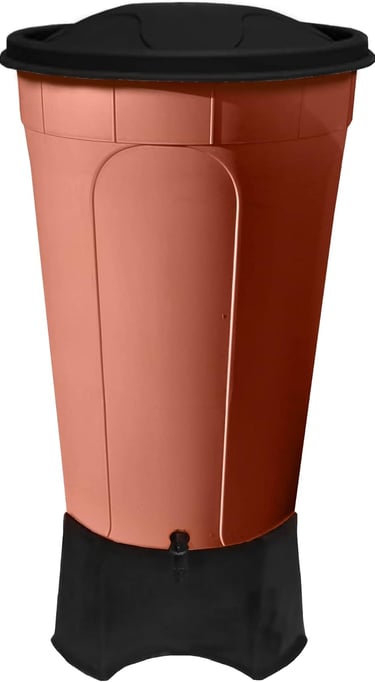
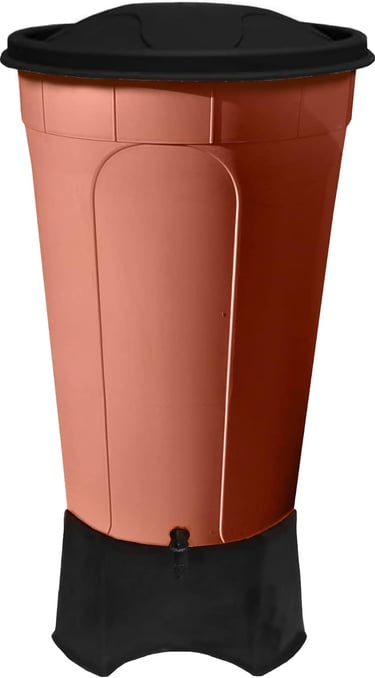
"Decorative" options (£80-150)
Wooden barrel style, fake terracotta
Same function, less eyesore factor
Worth it if neighbours are judgey
Diverter kit (£15-25)
Essential - diverts water from downpipe
Get one with overflow back to drain
Saves disconnecting in winter
Common Mistakes (And How to Avoid Them)
"I'll just put a bucket under the pipe": Overflows immediately, breeds mosquitoes, looks terrible.
Forgetting the tap: Scooping water out gets old fast. Fit a tap.
No overflow plan: Full butt + heavy rain = flooded foundations. Diverter kits handle this automatically.
Ground level placement: Gravity is your friend. Raise it at least 30cm.
Winter abandonment: Empty or disconnect in freezing weather unless you want a split butt come spring.
Beyond Basic Garden Watering
Collected rainwater is perfect for:
Greenhouse/polytunnel irrigation
Topping up wildlife ponds
Washing muddy boots/tools
Cleaning windows (no limescale streaks)
Car washing (again, no water spots)
Emergency toilet flushing (power cut backup)
Not suitable for:
Drinking (without proper treatment)
Hot tubs or paddling pools
Pressure washers (not enough pressure)
The Environmental Impact That Actually Matters
Every litre of rainwater used is a litre that didn't need:
Chemical treatment
Energy for pumping
Infrastructure maintenance
Your money
In areas with water scarcity or hosepipe bans, you're also:
Reducing strain on reservoirs
Maintaining gardens during restrictions
Proving sustainable gardening is possible
The Money Bit (Since We All Care Really)
Water butt cost: £40-100 one-off
Annual water saved: 5,000-10,000 litres
Savings if metered: £15-30 yearly
Payback time: 2-5 years
Not massive savings, but it's passive once installed. And if water prices keep rising (spoiler: they will), payback gets quicker.
Seasonal Reality Check
Spring: Peak usage time, butt empties regularly
Summer: Might run dry in extended heat (still saved thousands of litres first)
Autumn: Fills quickly, less garden usage
Winter: Disconnect if freezing, or keep tap open
One water butt won't make you water-independent. But it significantly reduces tap water usage when gardens need it most.
Is It Worth the Effort?
If you:
Water your garden regularly
Care about water conservation
Have accessible downpipes
Want lower water bills (if metered)
Then yes, absolutely. It's a one-time effort for years of free water.
If you:
Never water the garden
Live in a flat
Have no outside tap/garden
Move house frequently
Probably not your priority.
Getting Started This Weekend
Installing a water butt is one of those jobs that takes longer to think about than actually do. This weekend:
Measure your downpipe space
Order a basic 200L butt with diverter kit
Install it in under an hour
Start collecting free water
By next spring, you'll wonder why you didn't do this years ago.
The Bottom Line
A water butt won't save the planet single-handedly. But in a country where we get plenty of rain yet face increasingly common hosepipe bans, catching free water just makes sense.
Your plants prefer it. Your water bill shrinks. And you get the quiet satisfaction of watching everyone else panic during the next drought warning while your garden thrives on last month's rain.
Sometimes the best environmental choices are the ones that benefit you directly too.
Ready to Start Harvesting Rain?
If you're ready to stop watching useful water disappear down the drain, here are some solid water butt options to get you started: