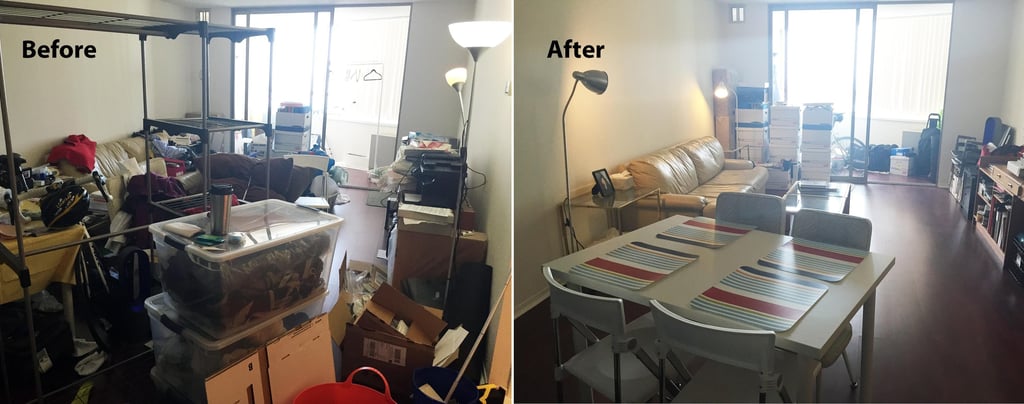
The Hidden Cost of Clutter: Every Item You Own Steals 30 Seconds a Week
Having less stuff saves 2-3 hours of cleaning weekly. Here's why decluttering isn't about minimalism – it's about getting your Saturdays back.
HOMETIMEADMIN


Time Saved: ★★★★☆ | Cost-Effectiveness: ★★★★★
Let me paint you a picture. It's Saturday morning. You're "quickly" tidying before guests arrive. Except you're not tidying – you're playing Tetris with stuff that doesn't have homes. Moving piles from surface to surface. Dusting around seventeen decorative objects. Searching for the hoover behind boxes of things you "might need someday."
Two hours later, your house looks... exactly the same but slightly neater.
What if I told you the problem isn't your cleaning skills? It's that you're cleaning around too much stuff.
The Time Cost Nobody Calculates
Every item in your home needs:
Cleaning (dusting, wiping, washing)
Moving (to clean under/around it)
Organising (finding homes for it)
Deciding (keep/bin/move during each tidy)
Multiply that by hundreds of possessions. That ceramic hedgehog collection? Ten minutes weekly just to dust around them. Those "decorative" cushions? Five minutes daily arranging them. The kitchen gadgets you use twice yearly? Constantly shoving them aside to reach actual useful items.
The 30-Second Rule
Here's the brutal truth: every unnecessary item costs you about 30 seconds weekly in maintenance. Doesn't sound like much until you realise you've got 200 unnecessary items. That's 100 minutes weekly. Nearly two hours of your life spent managing stuff you don't even like.
What Actually Counts as Clutter
It's not just obvious junk. Clutter includes:
Décor that serves no purpose except collecting dust
Duplicates (how many spatulas do you actually need?)
Aspirational purchases (that bread maker gathering dust)
Gifts you kept out of guilt
"Might be useful" items that never are
Anything you haven't touched in a year
The Psychology Bit That Matters
We're not going full Marie Kondo here. This isn't about joy-sparking or living in an empty white box. It's about this simple equation:
Time spent cleaning stuff you don't use = Time not spent doing literally anything else
Room-by-Room Reality Check
Kitchen: You use maybe 20% of what's in there regularly. The rest? Obstacles.
Keep: Daily dishes, favourite pans, actual working appliances
Bin: Broken items, unused gadgets, that fourth tin opener
Living Room: Should take 10 minutes to clean, not an hour
Keep: Furniture, few meaningful decorations, everyday items
Bin: Excessive cushions, random ornaments, old magazines
Bedroom: Sleep space, not storage unit
Keep: Current clothes, bedding, essentials
Bin: Clothes that don't fit, broken jewellery, bedroom chair pile
Bathroom: If products have dust on them, they're clutter
Keep: Daily products, fresh towels, cleaning supplies
Bin: Expired products, hotel miniatures, that foot spa from 2015
The Decluttering Method That Actually Works
Forget complex systems. Here's what works:
The One-Touch Rule: Pick item up. Decide immediately: Keep (and give it a home), Donate, or Bin. No "decide later" pile.
The Box Method: Put questionable items in a box. If you don't retrieve something within a month, it goes.
The 10-Minute Daily: Better than weekend purges. Set timer, declutter one small area.
The Replacement Rule: One in, one out. New jumper? Old one goes.
Where Stuff Actually Goes
Donate: Charity shops, Facebook Marketplace, Freecycle
Sell: Only if it's worth more than your hourly rate
Bin: Broken, stained, or genuinely unusable
Gift: If someone specifically wants it (not dumping your clutter on others)
Common Decluttering Mistakes
"But it was expensive!": The money's already gone. Now it's costing you time.
"I might need it!": You won't. And if you do, you can probably borrow one.
"It's still good!": So let someone who'll use it have it.
"But it was a gift!": The gift was the giving. You're not obligated to store it forever.
The Time Savings That Add Up
Let's use real numbers, not made-up statistics:
Save 1 hour weekly on cleaning by decluttering = 52 hours yearly
That's over a full working week of your life back
Even just 30 minutes saved weekly = 26 hours yearly
That's three full days you're not spending moving stuff around to clean
And this is conservative. Most people report saving 2-3 hours weekly after proper decluttering. That's 100-150 hours yearly. Nearly a month of working days.
The Immediate Benefits
Within one week of proper decluttering:
Cleaning takes half the time
You can find everything
Surfaces stay clear longer
Less decision fatigue
Actual space to use rooms properly
Starting This Weekend
Pick one surface (kitchen counter, coffee table)
Remove everything
Only put back what belongs there
Find homes for keepers, bin/donate the rest
Time how long it takes to clean now vs before
That time difference? That's your life being handed back to you.
The Maintenance Secret
Decluttering isn't a one-time event. It's:
Not buying unnecessary stuff
Regular donation bag in the wardrobe
One-in-one-out policy
Questioning every purchase
Who This Really Helps
Decluttering makes sense if you:
Spend ages cleaning but house still feels messy
Can't find things in your own home
Feel stressed by your environment
Buy storage solutions for stuff you don't need
Want more time, not more organizing systems
The Bottom Line
You don't need to become a minimalist. You don't need to own only 33 items. You just need to stop wasting hours of your life maintaining stuff that adds nothing to it.
Every item you remove is 30 seconds weekly returned to you. Start with 100 items (easier than you think), and you've just found 50 minutes every week. That's 43 hours a year. A full work week of your life back.
Ready to Get Your Weekends Back?
This weekend, pick one room. Remove everything that doesn't earn its space. Time how long it takes to clean before and after.
The difference will shock you. And motivate you to keep going.
Decluttering isn't about living with less. It's about living with more – more time, more space, and more energy for things that actually matter.