The Productivity Tool Everyone Knows About But Nobody Uses Properly
A proper to-do list saves 30-45 minutes daily. Here's why yours probably doesn't (and how to fix it).
WORKTECHADMINTIME


Time Saved: ★★★★☆ | Cost-Effectiveness: ★★★★★
Right, let's address the elephant in the room. You've tried to-do lists before. Probably bought a fancy notebook, downloaded seventeen apps, made beautiful colour-coded systems... then abandoned them all within a week.
You're not alone. Most to-do lists fail because we overcomplicate something that should be dead simple.
Why Your Current System Is Chaos
Without a proper list, here's what actually happens:
Spend 10 minutes remembering what you were supposed to do
Start three tasks, finish none
Panic-work on whatever feels most urgent
Forget that important thing until 4:55pm
Lie awake at night trying to remember everything for tomorrow
Sound familiar? That's about 30-45 minutes daily lost to mental juggling, task-switching, and general work chaos.
The To-Do List That Actually Works
Forget complex systems. Here's what actually saves time:
One list, one place: Not sticky notes everywhere, not multiple apps, not your email inbox plus a notebook plus your phone notes. One. List.
Write it the night before: 5 minutes before leaving work = 20 minutes saved tomorrow morning.
Be stupidly specific: "Email John" is useless. "Email John budget figures for Q4 proposal" actually gets done.
Time estimates matter: "Reply to emails (30 min)" stops you spending 2 hours in your inbox.
Digital vs Paper: The Truth Nobody Tells You
Paper wins for:
The satisfaction of crossing things off (genuinely motivating)
No notifications or distractions
Never runs out of battery
Can't accidentally delete everything
Digital wins for:
Recurring tasks (set once, appears automatically)
Sharing with teammates
Attaching files/links
Not losing the bloody thing
The winner? Whatever you'll actually use consistently. A basic phone notes app used daily beats a £50 planner gathering dust.
Why Most To-Do Lists Fail
Let's be honest about why we abandon them:
Too ambitious: Nobody's completing 47 tasks in a day. Be realistic or feel constantly defeated.
Too vague: "Work on project" isn't a task, it's a wish.
No priorities: Everything can't be urgent. Pick 3 must-dos maximum.
Wrong timing: Making tomorrow's list at 6am tomorrow defeats the entire point.
Perfectionism: Your list doesn't need color-coding, tags, and subcategories. It needs tasks you'll actually do.
The System That Sticks
Here's the method that actually saves those 30-45 minutes daily:
End-of-day ritual (5 minutes):
Brain dump everything for tomorrow
Mark the 3 things that MUST happen
Add realistic time estimates
Put it somewhere you'll see it first thing
Morning execution (2 minutes):
Check list
Start with hardest/most important task
Don't check email first (this is crucial)
Throughout the day:
New task appears? Add it to the list or it doesn't exist
Finished something? Cross it off immediately (the dopamine hit is real)
Getting overwhelmed? Return to your 3 must-dos
The Apps That Actually Work
For minimalists: Apple Notes/Google Keep
Free, syncs everywhere
No features to distract you
Perfect for basic lists
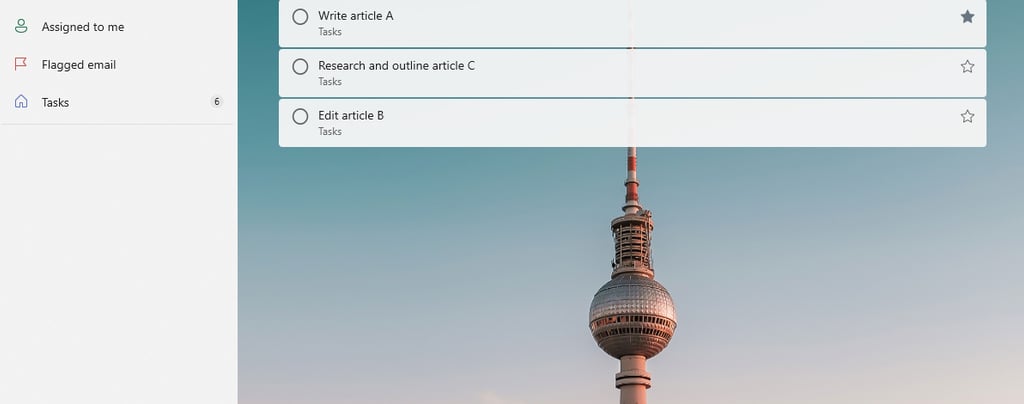
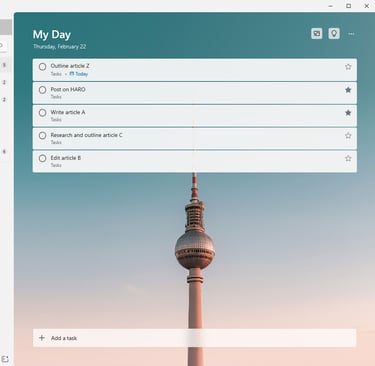
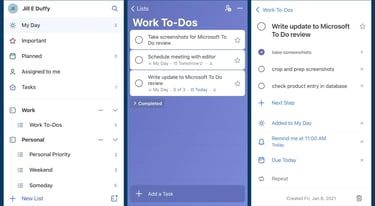
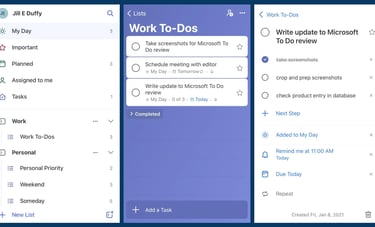
For work collaboration: Microsoft To-Do
Free with Office
Integrates with Outlook
Share lists with colleagues
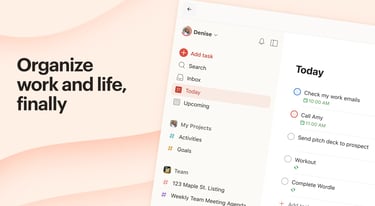
For recurring tasks: Todoist
Free version is plenty
"Every Monday" tasks auto-appear
Natural language input ("Email report every Friday at 2pm")
For paper lovers: Any notebook
But keep it A5 or smaller
One page per day
Leave it open on your desk
The Psychology Bit That Matters
Here's why this saves more time than any fancy app: decision fatigue is real. Without a list, you waste mental energy constantly deciding what to do next. With a list, that decision is already made.
You just execute.
Real-World Time Savings
Where those 30-45 minutes actually come from:
No morning "what should I do first?" paralysis (10 min)
No switching between half-remembered tasks (15 min)
No end-of-day panic about forgotten items (10 min)
No mental energy wasted keeping track (ongoing)
Over a year? That's 130-160 hours. Three full work weeks found just by writing things down.
Making It Stick This Time
The only to-do list that works is the one you use. So:
Start stupidly simple
One location only
Update it daily (non-negotiable)
Don't overthink it
Give it two weeks. That's all. If you can't see the time savings after 14 days of consistent use, abandon it forever.
Ready to Get Those 45 Minutes Back?
Tonight, before you leave work, grab whatever's nearest – phone, paper, back of an envelope. Write tomorrow's tasks. Be specific. Add time estimates.
Tomorrow morning, start with task one.
That's it. You've just bought yourself 45 minutes.
If you want to go digital, here are the apps that strike the best balance between features and simplicity: